The fertile river side, lush paddy fields, and verdant farm lands offer a place to call home for a variety of bird species, some of whom reside permanently, and some who migrate from faraway lands once in a while.
Birds are our most visible and vocal wild friends, and their unique behaviours make for fascinating viewing. Birdwatching is a great activity that allows our little ones to enjoy the environment while taking time away from screens and videogames. It is also among the best nature activities for kids if you want to teach them to appreciate wildlife, big and small.
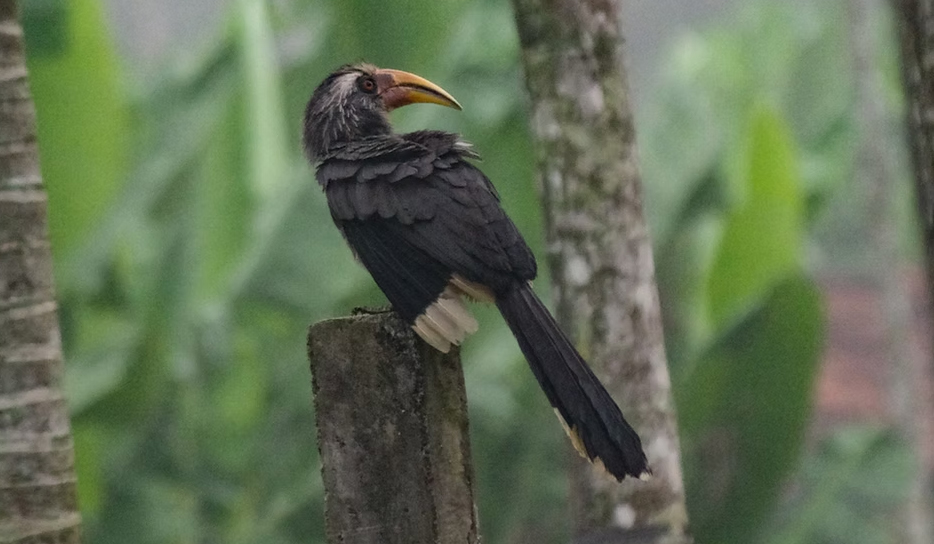
MALABAR GREY HORNBILL
Ocyceros griseus
Among the smallest of the Asian hornbill species
Distinctive laughing or cackling sound
Lacks the casque found on many other hornbills
Seed dispersal agents for many species of fruit-bearing trees
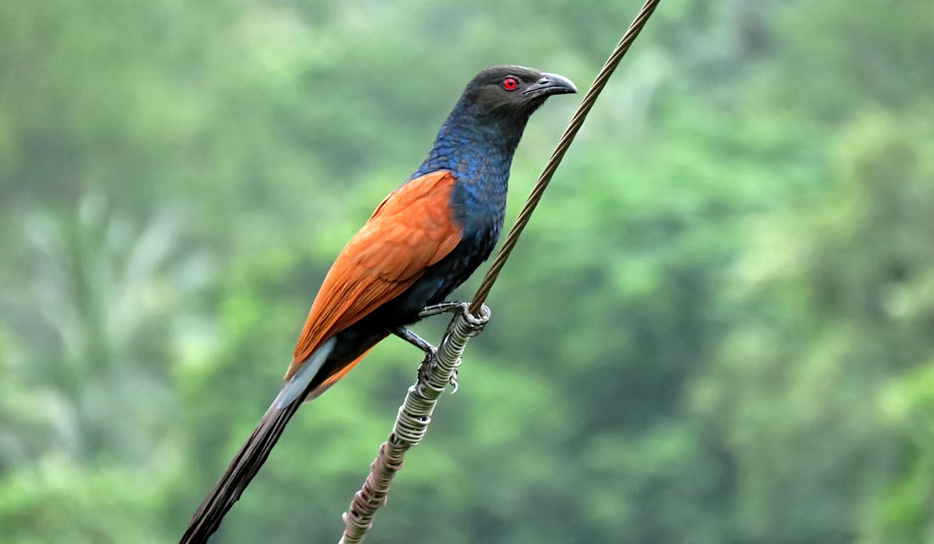
GREATER COUCAL
Centropus sinensis
Also known as crow pheasant
Belongs to the cuckoo family
They have a familiar, deep, resonant call
Associated with omens in many parts of the subcontinent
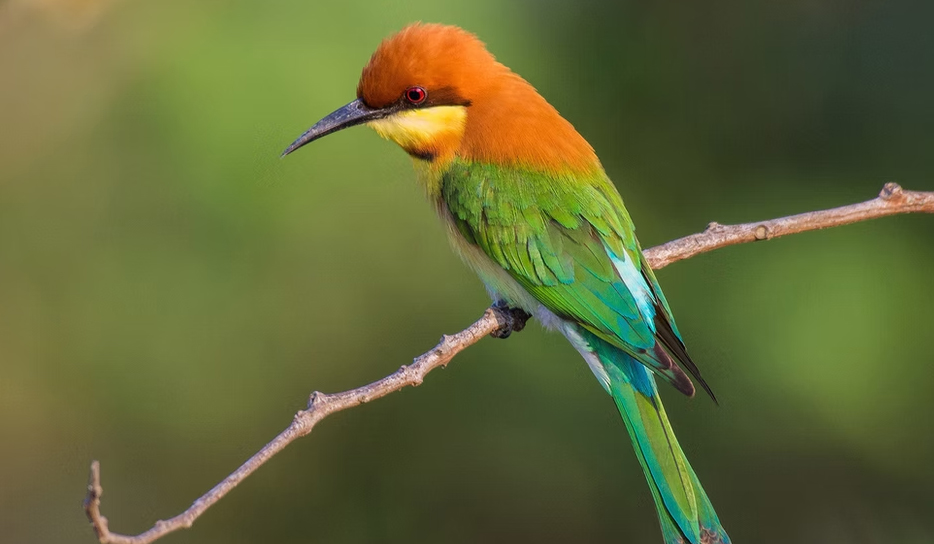
CHESTNUT-HEADED BEE EATER
Merops leschenaulti
Named after Col. Samuel Richard Tickell
Usually feed on flying and crawling insects
Lead a solitary life outside their breeding season
Typically lives for over 10 years in the wild
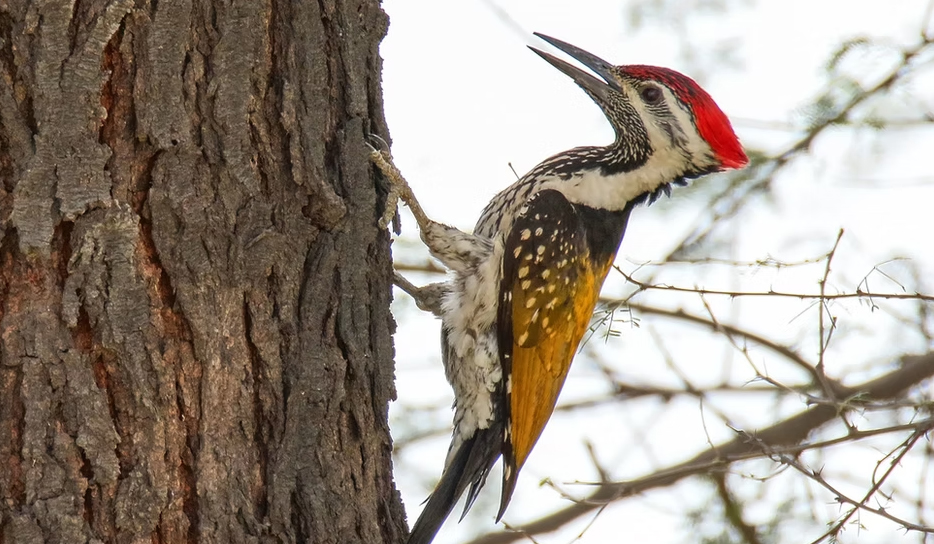
BLACK-RUMPED FLAMEBACK
Dinopium benghalense
Also called lesser goldenbacks
Usually seen in pairs
Has a characteristic rattling-whinnying call
Typically feeds on beetle larvae and termites
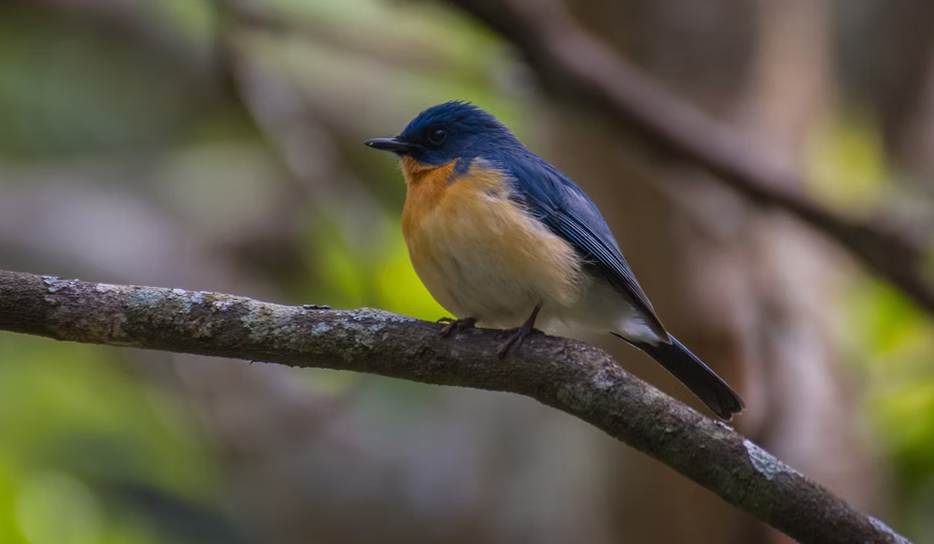
TICKELL’S BLUE FLYCATCHER
Cyornis tickelliae
Named after Col. Samuel Richard Tickell
Usually feed on flying and crawling insects
Lead a solitary life outside their breeding season
Typically lives for over 10 years in the wild
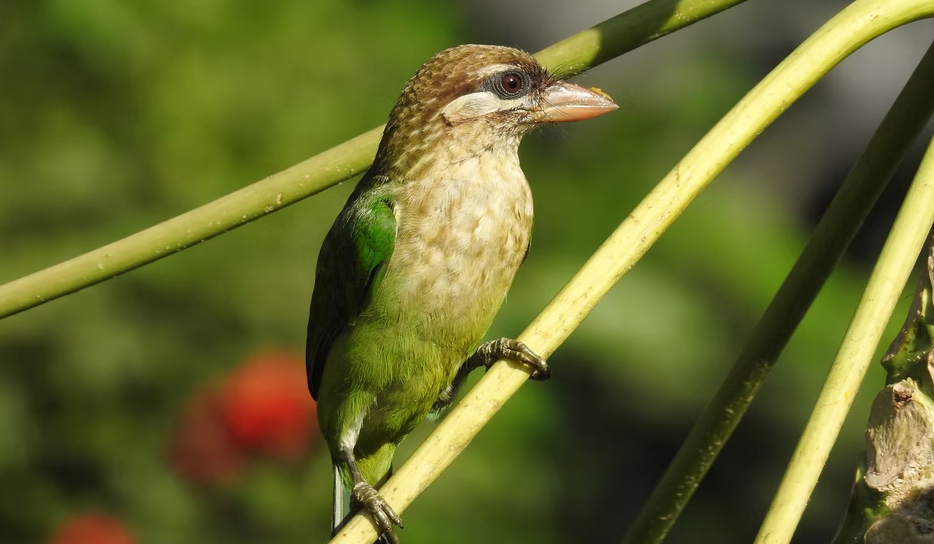
WHITE-CHEEKED BARBET
Psilopogon viridis
Found only in southern India
They are non-migratory, resident birds
Mainly eat fruits and, sometimes, insects
Breeding season is from December to June
YELLOW-BROWED WARBLER
Phylloscopus inornatus
Constant motion makes it difficult to observe
Has a shrill and loud sound belying its small size
Usually travel and forage for food in groups
Migrates through Western Europe along the North Sea